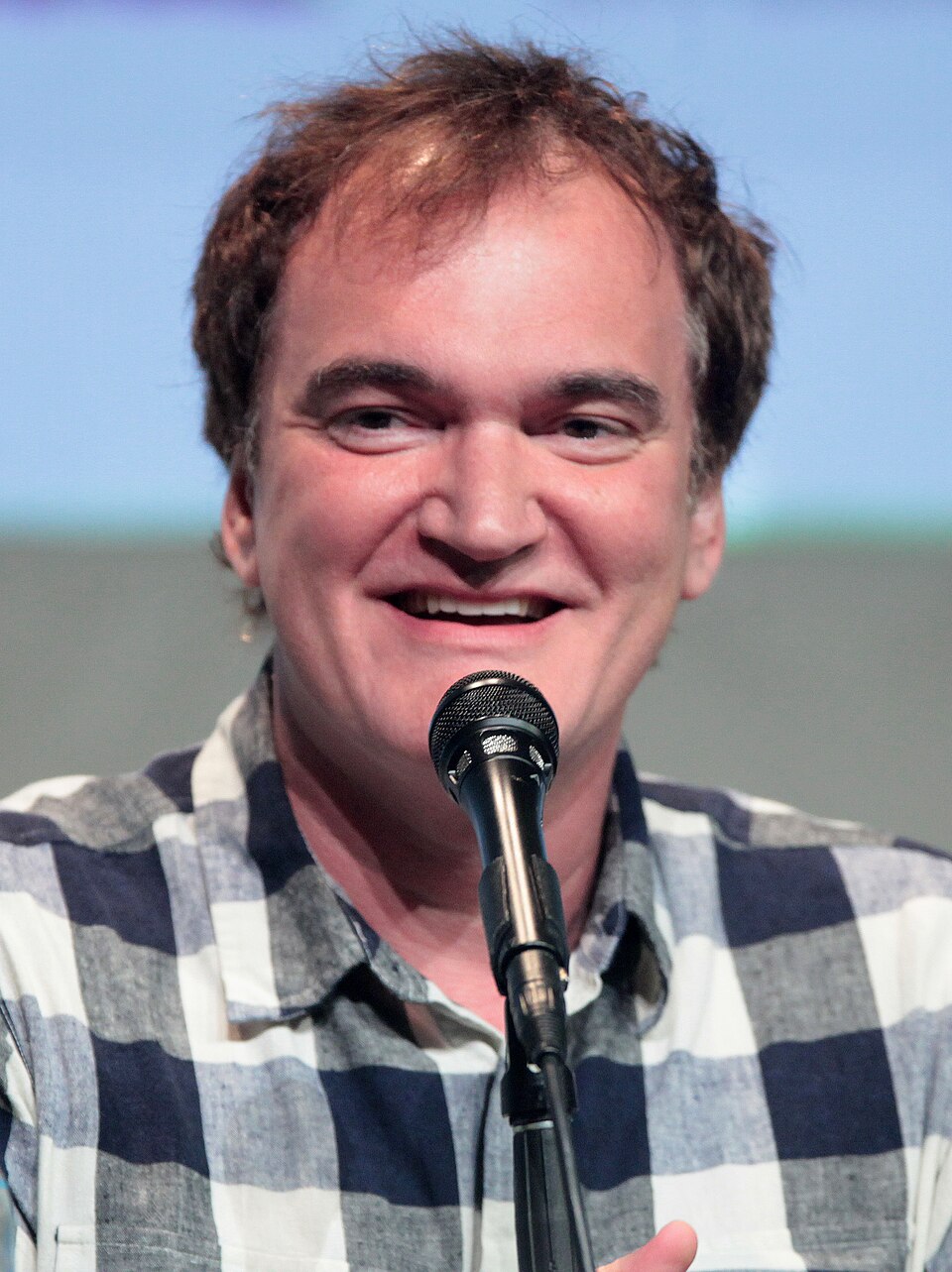
Quentin Tarantino's Enduring Influence on Cinema
Few filmmakers have left as indelible a mark on contemporary cinema as Quentin Tarantino. For over three decades, this high-school dropout, who honed his craft working in a video store and acting in bit parts on sitcoms, has ascended to become one of the most celebrated and discussed directors of all time. Born Quentin Jerome Tarantino in Knoxville, Tennessee, in 1963, his journey from an avid film enthusiast to an Academy Award-winning auteur is a testament to his unique vision and unwavering commitment to cinematic storytelling.
Tarantino's films are not merely entertainment; they are a distinctive universe woven from audacious dialogue, kinetic violence, rich pop-culture tapestries, and innovative narrative structures. His work has not only garnered numerous accolades, including Academy Awards, Golden Globes, BAFTAs, and the prestigious Palme d'Or, but has also profoundly reshaped audience expectations and influenced a generation of aspiring filmmakers. But even for a director of such consistent acclaim, one question occasionally surfaces among cinephiles and casual viewers alike: which film, if any, could be considered the quentin tarantino worst movie? Delving into this question offers a fascinating lens through which to appreciate the breadth and impact of his extraordinary career.
The Unmistakable Style of a Master Filmmaker
What defines a Quentin Tarantino film? It's a question with a multi-faceted answer, but certain elements recur with almost signature regularity, making his work instantly recognizable. His cinematic DNA is characterized by:
- Pithy, Profane Dialogue: Tarantino is a master of conversation. His characters engage in extended, often seemingly tangential, yet utterly captivating exchanges that are sharp, witty, and liberally peppered with profanity. This dialogue not only builds character but often serves as a primary driver of tension and humor.
- Pop-Culture References: From obscure movie lines to forgotten TV show themes, Tarantino's films are treasure troves of pop-culture nods. These references are not mere Easter eggs; they inform character motivations, set the tone, and invite audiences into the filmmaker's own encyclopedic knowledge of cinema and media.
- Graphic Violence & Over-the-Top Cinematic Flourishes: Violence in Tarantino's world is often stylized, aestheticized, and unapologetically brutal. Yet, it's frequently presented with a theatricality that can be shocking, comedic, or even strangely balletic. This is complemented by his penchant for unconventional camera angles, striking mise-en-scène, and distinct musical choices that elevate ordinary scenes into iconic moments.
- Nonlinear Storytelling: Early in his career, Tarantino embraced nonlinear narratives, weaving together disparate timelines and perspectives to create intricate, puzzle-like plots that challenged traditional cinematic conventions. This technique, alongside the aestheticization of violence, marked him as a truly independent and groundbreaking filmmaker in the early 1990s.
- Genre Blending and Homage: His films are a vibrant blend of genres, paying homage to everything from Hong Kong actioners and Blaxploitation films to old TV Westerns and crime capers. These influences aren't just copied; they are absorbed, reinterpreted, and presented through his unique postmodern lens.
In his later years, Tarantino has expanded this stylistic palette to include pulpy reimaginings of real history, offering alternative narratives to established events, further cementing his reputation as a director unafraid to challenge conventions.
From Indie Darling to Hollywood Royalty: A Filmography Overview
Tarantino's journey began with significant groundwork. He wrote and sold the script for True Romance (1993), directed by the late Tony Scott, before making his directorial debut. For a deeper dive into his entire filmography, including details on each release, explore Every Quentin Tarantino Movie: A Complete Guide.
The Breakthroughs: Reservoir Dogs and Pulp Fiction
His feature directorial debut, Reservoir Dogs (1992), immediately announced the arrival of a major talent. A Sundance sensation, this tale of a diamond heist gone wrong became one of the cornerstone films that established the festival as a hub for independent cinema in the '90s. The buzz around Mr. Pink, Mr. Blonde, and their criminal cohorts made Tarantino one of the most talked-about filmmakers in Hollywood. However, even this early success wasn't without its detractors, drawing particular criticism for its liberal use of racial slurs – an early indication that Tarantino's bold choices would often spark debate. The controversies and critical acclaim surrounding his early works, such as *Reservoir Dogs*, are further explored in Tarantino's Early Films: Debut, Impact, and Controversy.
It was his sophomore effort, Pulp Fiction (1994), that transformed Tarantino from an indie darling into a bona fide household name. The pop-culture impact of this nonlinear crime epic is difficult to overstate. It swept top prizes from the Cannes Film Festival to the MTV Movie Awards, was parodied by shows like The Simpsons, and revitalized John Travolta's career while elevating Samuel L. Jackson and Uma Thurman to bonafide movie stars. The film introduced new slang into the lexicon, repopularized surf rock, and spawned countless imitators attempting to capture its inimitable "cool factor."
Evolving Narratives and Historical Reimagining
Following his initial successes, Tarantino continued to craft films that pushed boundaries and delighted audiences. From the revenge saga of Kill Bill Volumes 1 & 2 to the historical epics like Inglourious Basterds and Django Unchained, his filmography demonstrates a consistent evolution while retaining his signature voice. His recent works, such as Once Upon a Time in Hollywood, further showcase his talent for blending meticulously researched historical backdrops with his distinctive, often hyper-real, storytelling.
Debating the Canon: Is There a "Quentin Tarantino Worst Movie"?
When discussing a director as consistently acclaimed and distinctive as Quentin Tarantino, the notion of identifying a "worst" film is inherently complex and subjective. Unlike filmmakers who might experience critical or commercial flops, Tarantino's oeuvre maintains a remarkably high standard of artistic ambition and execution. Every one of his films, despite varying levels of critical praise or box office success, embodies his unique vision and stylistic trademarks.
To label a film the "quentin tarantino worst movie" is often less about objective failure and more about individual preference, specific controversial elements, or a film simply not resonating as strongly with a particular segment of the audience. For instance, while Reservoir Dogs is widely celebrated, its use of racial slurs, as mentioned earlier, has always been a point of contention for some viewers, leading them to personally rank it lower. Similarly, some critics or audience members might find certain films, like Death Proof (often paired with Robert Rodriguez's Planet Terror in the Grindhouse double feature), to be less compelling than his more mainstream successes. While admired by many for its homage to grindhouse cinema and slasher films, its narrative might be perceived as more indulgent or less tightly constructed compared to the intricate plots of Pulp Fiction or Inglourious Basterds.
However, even films that might receive slightly more mixed reviews still possess Tarantino's signature dialogue, compelling performances, and meticulous craftsmanship. The "worst" in this context rarely implies a lack of quality, but rather a slight deviation from the perceived peaks of his brilliance, or perhaps a stylistic choice that proved more polarizing. Ultimately, what one person considers their least favorite Tarantino film, another might champion as an underrated masterpiece. This vibrant debate is, in itself, a testament to the enduring impact and diverse appeal of his work.
Tarantino's Legacy: Shaping Modern Cinema
It is difficult to overstate how influential Quentin Tarantino and his films have been in American and global cinema since the mid-1990s. His unique approach to screenwriting, direction, and genre deconstruction has inspired countless filmmakers to experiment with narrative, dialogue, and visual style. Dozens of "fast-talking imitators" emerged in his wake, trying to replicate his particular brand of cool, though few could match his originality and depth.
Tarantino has not only crafted commercially successful films that remain in constant circulation but has also demonstrated the power of the auteur, proving that a distinct personal vision can achieve both critical adoration and widespread popular appeal. His films are more than just stories; they are experiences that continue to provoke, entertain, and inspire, ensuring his place as an icon in cinematic history.
Quentin Tarantino's influence is undeniable, having permanently altered the landscape of modern cinema. From his daring debut to his complex historical reimaginings, his films challenge, entertain, and continually spark discussion. While the debate over the "quentin tarantino worst movie" might persist as a fun, albeit subjective, exercise among fans, it merely highlights the consistent artistic integrity and lasting impact that defines his remarkable career. His work serves as a road map to his own cinematic obsessions, inviting audiences to share in a blood-soaked, pop-culture-infused, and utterly unforgettable ride.